When you’re driving on a reasonably flat, straight road, your car should generally maintain its direction without requiring constant steering correction. If you find yourself continually holding the steering wheel against the vehicle’s tendency to drift left or right, something may need attention.
A car pulling to one side isn’t simply annoying. Depending on the cause, it can contribute to uneven tyre wear, affect handling and potentially indicate a problem with your tyres, wheel alignment, brakes, steering or suspension.
RACV notes that poor wheel alignment can cause symptoms including pulling to one side, uneven tyre wear and a crooked steering wheel. Pothole impacts can also affect tyres, wheels, steering and suspension components.
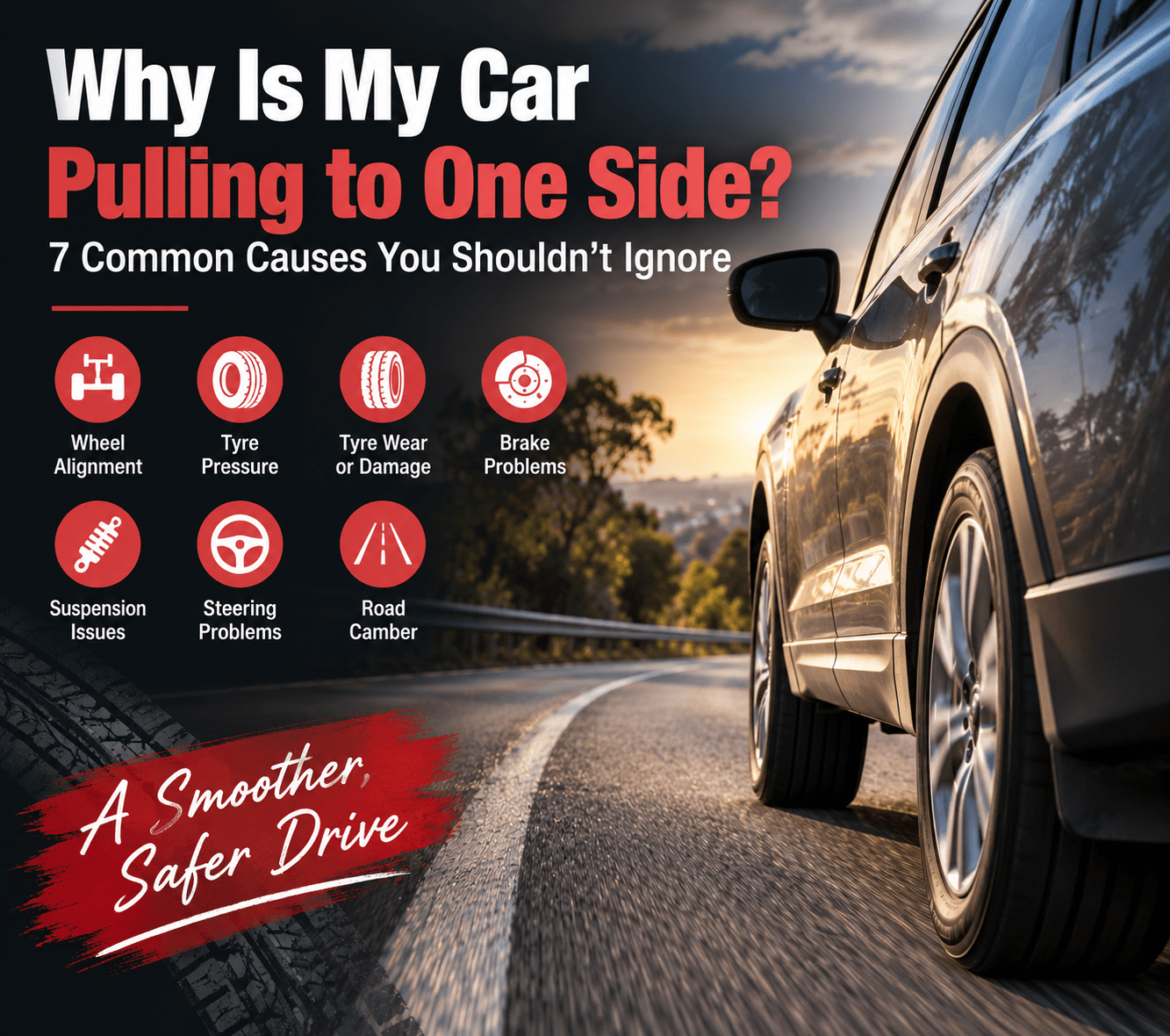
If your car has recently started pulling left or right, here are seven common causes worth investigating.
1. Incorrect Wheel Alignment
Wheel alignment is one of the first things to consider when a vehicle consistently pulls to one side.
Your wheels need to sit at specific angles relative to the road and each other. These alignment angles are designed to support predictable handling and even tyre wear.
Normal driving conditions can gradually affect alignment, while impacts such as hitting a pothole or kerb may cause a more noticeable change.
Signs that your wheel alignment may need checking include:
- The vehicle consistently pulling left or right
- An off-centre steering wheel when driving straight
- Uneven tyre wear
- Steering that feels different from normal
- Changes in handling after hitting a pothole or kerb
RACV identifies pulling to one side, uneven tyre wear and a crooked steering wheel among the signs of poor alignment.
If you’re experiencing these symptoms, a professional Tyres & Wheel Alignment inspection can help determine whether alignment is responsible.
2. Uneven or Incorrect Tyre Pressure
Before assuming there’s a major mechanical problem, check your tyre pressures.
A significant difference in pressure between tyres can affect how your vehicle handles. An underinflated tyre has different rolling characteristics and road contact compared with a correctly inflated tyre.
Incorrect tyre pressure can also contribute to premature or uneven tyre wear and affect braking and handling.
Check the pressure of all tyres when they’re cold and compare the readings with the manufacturer’s recommended pressures. These are commonly shown on a placard inside the driver’s door jamb, although the location varies between vehicles.
If one tyre repeatedly loses pressure after being inflated correctly, don’t simply keep topping it up. A slow puncture, valve problem, tyre damage or wheel issue may need to be investigated.
3. Uneven Tyre Wear or Tyre Damage
Even when your tyre pressures are correct, the condition of the tyres themselves can affect how the car behaves.
Look closely at the tread across each tyre. One tyre may have significantly more wear on its inner or outer edge than another. You should also look for cuts, bulges, cracks or other visible damage.
Uneven wear can be associated with wheel alignment, suspension problems or incorrect tyre inflation.
Don’t only inspect the easiest part of the tyre to see. Inner-edge wear can sometimes go unnoticed because it isn’t obvious when you’re standing beside the vehicle.
If you find abnormal wear, replacing the tyre without investigating the underlying cause may only solve the problem temporarily. The new tyre could begin wearing unevenly as well.
4. A Brake Problem
There’s an important clue that can help separate a possible brake issue from an alignment problem:
Does the vehicle mainly pull when you apply the brakes?
If the car travels relatively straight under normal conditions but moves noticeably to one side during braking, the braking system should be inspected.
A brake issue may cause braking force to become uneven between the wheels. Because brakes are a critical safety system, a new or significant pulling sensation during braking shouldn’t be ignored.
Other symptoms that may accompany a brake problem include:
- Grinding or squealing noises
- Reduced braking performance
- Vibration when braking
- An unusual brake pedal feel
- A brake warning light
- A burning smell or unusual heat around a wheel
A brake warning light can indicate issues such as low brake fluid, worn brake pads or another braking system fault, and RACV recommends having the system checked if the warning remains illuminated after the handbrake is released.
If your vehicle pulls when braking, arrange a Brake Replacement and Inspection rather than assuming the problem is simply wheel alignment.
5. Worn or Damaged Suspension Components
Your suspension does much more than make the ride comfortable. It helps maintain tyre contact with the road and contributes to vehicle stability and handling.
Suspension components naturally wear over time, while potholes and hard impacts can accelerate damage.
Potential symptoms of suspension trouble can include:
- Vehicle pulling or wandering
- Uneven tyre wear
- Knocking or clunking noises
- Excessive bouncing
- Poor handling around corners
- A vehicle that appears lower on one side
- Steering that feels less stable than usual
RACV notes that worn suspension components can contribute to excessive tyre wear, while pothole impacts can damage components such as shock absorbers, struts, springs, control arms and wheel bearings.
Because steering, suspension, tyres and alignment work together, diagnosing the cause often requires looking beyond one individual component.
If your vehicle has developed unusual handling, noises or vibrations, a broader General Car Repairs inspection may be appropriate.
6. Steering System Problems
Not every pulling problem begins at the wheels.
Wear or faults within the steering system can affect how accurately the vehicle responds to steering input. Depending on the vehicle, the steering system may include components such as tie rods, steering joints, a steering rack and electric or hydraulic power steering components.
You might notice:
- Excessive play in the steering wheel
- Wandering at higher speeds
- Unusual noises while turning
- Steering that feels unusually heavy or light
- Difficulty keeping the vehicle travelling straight
- Vibration or feedback through the steering wheel
These symptoms shouldn’t automatically be blamed on wheel alignment.
A proper inspection can help determine whether the cause is alignment, tyres, steering, suspension or a combination of factors.
7. Road Camber
Sometimes your car isn’t actually faulty.
Roads aren’t always perfectly flat. Many are intentionally constructed with a slight slope to help water drain away from the driving surface. This is commonly referred to as road camber or crossfall.
As a result, you may notice a small tendency for your vehicle to follow the slope of certain roads.
The key is consistency.
If your car only drifts slightly on particular roads but feels normal elsewhere, road design may be contributing. If it strongly or consistently pulls in the same direction across different reasonably flat roads, it deserves further investigation.
Why Did My Car Start Pulling After Hitting a Pothole?
This is particularly worth paying attention to.
A significant pothole impact can damage a tyre or wheel, disturb wheel alignment or affect suspension and steering components. RACV advises watching for tyre damage, unusual noises, warning lights, fluid leaks and changes in steering or handling after a pothole strike.
Even when you can’t see obvious damage, a change in how the vehicle drives is worth investigating.
If the steering wheel suddenly sits differently or the car starts pulling after an impact, don’t wait until the tyres show severe uneven wear before having it checked.
Why Does My Car Pull Only When Braking?
This distinction can provide a useful diagnostic clue.
If your car pulls all the time, possible causes include wheel alignment, tyre pressure, tyre condition, steering or suspension.
If it pulls primarily when braking, the braking system deserves particular attention.
If it started pulling immediately after hitting a pothole or kerb, tyres, wheels, alignment and suspension should be checked.
These aren’t definitive diagnoses, however. Several problems can produce similar symptoms, which is why a physical inspection is important when the cause isn’t obvious.
Can Poor Wheel Alignment Damage My Tyres?
Misalignment can contribute to premature and uneven tyre wear. RACV recommends considering an alignment check when uneven wear is detected and notes that misaligned wheels can cause tyres to wear faster.
This means delaying an alignment issue may eventually cost more than correcting the alignment itself.
If you notice one edge of your tyres wearing significantly faster than the rest, don’t wait until the tread is worn out. Have the cause investigated.
How Can I Help Prevent Alignment and Tyre Problems?
You can’t avoid every pothole or worn component, but some straightforward habits can help you spot problems earlier.
Check your tyre pressures regularly using the manufacturer’s recommended figures, inspect the tread for uneven wear or damage and pay attention to changes in steering behaviour. RACV recommends checking tyre pressures and condition regularly and before long trips.
It’s also worth arranging an inspection when you notice a significant change after hitting a pothole or kerb.
Regular Logbook Servicing provides another opportunity for developing tyre, steering and suspension issues to be identified before they become more noticeable.
Don’t Ignore a Car That Suddenly Starts Pulling
A slight drift caused by the shape of a particular road can be normal. A strong or persistent pull, however, deserves attention.
The problem may be as straightforward as tyre pressure or wheel alignment, but it could also involve tyre damage, brakes, suspension or steering components.
Continuing to drive without identifying the cause can lead to accelerated tyre wear and potentially affect the way your vehicle handles.
If your car is pulling left or right, Automotive Instincts can inspect the vehicle and help identify the underlying cause.
For professional Tyres & Wheel Alignment, Brake Replacement and General Car Repairs in Reservoir, contact Automotive Instincts to arrange an inspection.
Automotive Instincts
📍 Reservoir, VIC
📞 03 9478 8733
Frequently Asked Questions
Is it safe to drive if my car is pulling to one side?
It depends on the severity and cause. A slight tendency on a cambered road may be normal, while a strong or sudden pull can indicate a tyre, brake, steering, suspension or alignment problem. If the vehicle feels unstable, braking is affected or a tyre appears damaged, avoid continuing to drive until you’ve obtained professional advice.
Will a wheel alignment fix my car pulling to one side?
It can if incorrect alignment is the cause. However, pulling can also result from tyre pressure, uneven tyre wear, brake problems or worn steering and suspension components. An inspection should identify the cause before assuming an alignment alone will solve it.
Why does my steering wheel sit crooked when I’m driving straight?
An off-centre steering wheel can be associated with incorrect wheel alignment. RACV lists a crooked steering wheel as one of the signs that alignment may have been affected.
Why does my car pull to one side when I brake?
If pulling occurs mainly during braking, uneven braking performance or another brake system issue may be involved. Because braking is safety critical, have the vehicle inspected rather than trying to compensate through the steering wheel.
Can low tyre pressure make a car pull?
A significant pressure difference can affect vehicle handling. Check all tyres against the manufacturer’s recommended cold pressures. Incorrect inflation can also increase tyre wear and affect handling and braking.
Should I get my wheel alignment checked after hitting a pothole?
If the vehicle begins pulling, the steering wheel becomes off-centre, you notice vibration or the tyres start wearing unevenly after a pothole impact, an inspection is sensible. Potholes can affect tyres, wheels, alignment and suspension components.


No comment