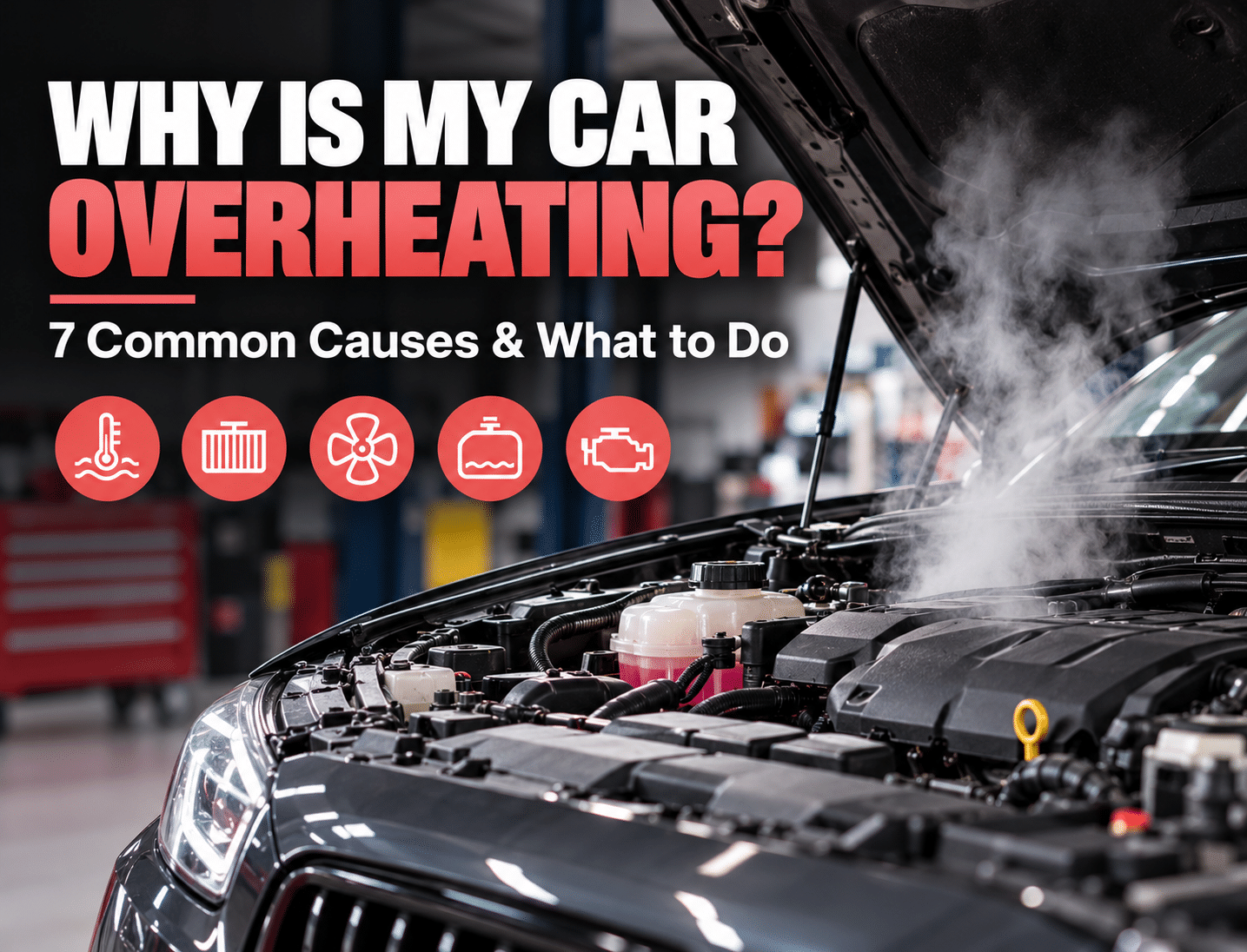
An overheating engine is something no driver wants to experience, particularly when travelling through Melbourne’s busy traffic or heading out on a long summer drive. One moment your vehicle may be running normally, and the next, the temperature gauge starts climbing, a warning light appears or steam begins escaping from beneath the bonnet.
While engine overheating can happen for several reasons, it should never be ignored. Excessive heat can damage important engine components, potentially turning a relatively straightforward cooling system repair into a much more expensive mechanical problem.
Understanding why your car is overheating, recognising the early warning signs and knowing what to do can help you respond safely and avoid unnecessary engine damage.
At Automotive Instincts in Reservoir, we understand how frustrating unexpected mechanical problems can be. In this guide, we’ll explain seven common causes of car overheating, what you should do if your engine temperature rises and how regular maintenance can help reduce the risk.
What Are the Warning Signs of an Overheating Engine?
Your vehicle may show several warning signs before the engine reaches a dangerously high temperature.
Common symptoms include:
-
Temperature gauge rising: The needle moves towards the hot or red section of the gauge.
-
Engine temperature warning light: A red temperature symbol or warning message appears on the dashboard.
-
Steam from under the bonnet: Steam may indicate that coolant is escaping from an overheated or pressurised cooling system.
-
Sweet or unusual smell: Leaking coolant can produce a distinctive sweet smell.
-
Reduced engine performance: Some vehicles may reduce engine power to help protect components.
-
Coolant leaking underneath the vehicle: A puddle of coloured fluid may indicate a cooling system leak.
Not every vehicle has a traditional temperature gauge. Many modern cars rely on dashboard warning lights or digital temperature displays.
If your vehicle displays an overheating warning, take it seriously, even if the engine appears to be running normally.
1. Low Engine Coolant Levels
One of the most common reasons for a car overheating is insufficient engine coolant.
Coolant circulates through the engine, absorbing heat and transferring it to the radiator, where that heat can be released into the surrounding air.
When coolant levels become too low, the cooling system may struggle to control engine temperature.
Low coolant can result from:
-
Leaking hoses or connections
-
A damaged radiator
-
A faulty coolant reservoir or pressure cap
-
A leaking water pump
-
Internal engine problems
Unlike fuel, coolant should not need frequent topping up in a healthy, sealed cooling system.
If you regularly need to add coolant, there may be a leak or another underlying problem that requires investigation.
What should you do?
Allow the engine to cool completely before checking the coolant level according to your vehicle manufacturer’s instructions. Never open the radiator cap or pressurised coolant reservoir while the engine is hot.
If coolant levels repeatedly drop, arrange a professional inspection rather than relying on regular top-ups.
2. Coolant Leaks
A cooling system leak can cause an engine to overheat because the system gradually loses the fluid needed to regulate temperature.
Leaks can develop in several locations, including the radiator, hoses, water pump, coolant reservoir and connections.
Some leaks are easy to identify, while others only become noticeable when the engine is hot and the cooling system is pressurised.
You may notice:
-
Coloured liquid beneath the vehicle
-
A sweet smell after driving
-
White residue around cooling system connections
-
Steam from the engine compartment
-
A falling coolant level
-
Engine temperature rising unexpectedly
Coolant leaks should be investigated promptly because continued coolant loss can eventually lead to severe overheating.
A professional cooling system pressure test may help identify leaks that are difficult to locate during a basic visual inspection.
For cooling system faults and other mechanical concerns, Automotive Instincts provides General Car Repairs in Reservoir.
3. Faulty Thermostat
The thermostat is an important component of your vehicle’s cooling system.
It helps regulate coolant flow between the engine and radiator, allowing the engine to reach and maintain an appropriate operating temperature.
When the thermostat becomes stuck closed, coolant circulation through the radiator may be restricted, causing engine temperature to rise.
Common symptoms can include:
-
Engine temperature increasing unusually quickly
-
Temperature gauge readings becoming abnormal
-
Overheating during normal driving
-
Inconsistent cabin heater performance
A thermostat that becomes stuck open can also cause problems, although it more commonly prevents the engine from reaching its normal operating temperature.
Because several cooling system faults can produce similar symptoms, thermostat problems should be properly diagnosed before replacing parts.
4. Blocked or Damaged Radiator
Your radiator plays a central role in keeping the engine cool.
As hot coolant passes through the radiator, airflow helps remove heat before the coolant returns to the engine.
Over time, radiators can develop problems that reduce cooling efficiency.
Potential issues include:
-
Internal blockages restricting coolant flow
-
External debris obstructing airflow
-
Corrosion or deterioration
-
Damaged radiator fins
-
Leaking radiator tanks or connections
A radiator that cannot release heat effectively may struggle to keep the engine at its correct operating temperature, especially during warmer weather or demanding driving conditions.
If your vehicle repeatedly overheats, a mechanic may need to inspect the radiator and the broader cooling system to identify the cause.
5. Cooling Fan Failure
Have you noticed your car overheating while sitting in traffic but returning closer to normal temperature once you start driving?
A cooling fan problem is one possible explanation.
When a vehicle is moving, air passes through the radiator and helps remove heat. When you’re stationary or travelling slowly, the cooling fan becomes particularly important.
Modern vehicles commonly use electric cooling fans controlled by the engine management system.
Cooling fan problems may involve:
-
A failed electric fan motor
-
Damaged wiring or electrical connections
-
Faulty relays or fuses
-
Temperature sensor faults
-
Fan control system problems
If the fan doesn’t operate when required, the engine may overheat during extended periods of idling or stop-start traffic.
Because cooling fans involve electrical components and control systems, proper diagnosis is important.
Automotive Instincts also provides Auto Electrical Repairs in Reservoir for vehicle electrical faults.
6. Failing Water Pump
The water pump is responsible for circulating coolant through the engine and cooling system.
If the pump becomes damaged, worn or unable to circulate coolant effectively, engine temperatures can rise.
Depending on the vehicle and type of failure, warning signs may include:
-
Coolant leaking around the water pump
-
Unusual noises from the engine area
-
Repeated overheating
-
Coolant circulation problems
-
Temperature fluctuations
Some water pumps are driven by the engine’s timing belt or accessory belt, while others use an electric motor.
A water pump failure can become a serious problem because the engine relies on consistent coolant circulation.
If your mechanic identifies a failing water pump, the appropriate repair will depend on the vehicle’s design and the condition of related components.
7. Blown Head Gasket
A damaged head gasket is one of the more serious potential causes of engine overheating.
The head gasket seals the connection between the engine block and cylinder head. It helps keep combustion gases, engine oil and coolant in their intended passages.
When the gasket fails, combustion gases may enter the cooling system, coolant may leak into the engine cylinders or fluids may mix.
Possible symptoms include:
-
Repeated or severe overheating
-
Unexplained coolant loss
-
Persistent white exhaust smoke after the engine has warmed up
-
Rough running or misfiring
-
Bubbles in the coolant reservoir
-
Milky contamination in the engine oil in some cases
These symptoms aren’t exclusive to head gasket failure, so professional testing is essential.
A head gasket problem can sometimes develop after an engine has already experienced severe overheating. This is one reason why continuing to drive an overheating vehicle can be particularly costly.
Early diagnosis may help prevent further damage to the engine.
What Should You Do If Your Car Overheats?
Knowing how to respond when your engine overheats is just as important as understanding what caused the problem.
If your temperature gauge rises into the red zone, an overheating warning appears or steam begins escaping from the engine compartment, follow these steps.
Step 1: Pull Over Somewhere Safe
Find a safe place to stop as soon as possible.
If you’re travelling on a busy Melbourne road or freeway, avoid sudden manoeuvres and move away from traffic when it is safe.
Switch on your hazard lights if necessary to alert other drivers.
Step 2: Turn Off the Engine
Once safely stopped, switch off the engine to prevent further heat generation.
If you’re unable to stop immediately, switching off the air conditioning may temporarily reduce engine load while you reach a safe location. However, this is not a reason to continue driving an overheating vehicle.
RACQ advises stopping promptly because even a short period of continued driving can significantly increase engine damage.
Step 3: Allow the Engine to Cool
Do not immediately open the bonnet if steam is escaping.
Wait until the steam has stopped and the engine has cooled sufficiently before attempting any inspection.
Never remove a radiator cap or pressurised coolant reservoir cap while the engine is hot.
Hot coolant can be under considerable pressure and may spray out, causing serious burns.
Step 4: Check for Visible Problems
Once the engine has completely cooled and it is safe to inspect, you may be able to identify obvious problems such as:
-
Coolant leaking beneath the vehicle
-
A damaged or disconnected hose
-
An unusually low coolant level
-
Visible damage around the radiator
Avoid touching hot components or attempting repairs beside moving traffic.
If you’re uncertain about the condition of the vehicle, leave the inspection to a professional.
Step 5: Arrange Roadside Assistance or Mechanical Inspection
If your vehicle has overheated significantly, lost coolant or displayed a persistent temperature warning, arranging roadside assistance and towing is generally the safest option.
Simply allowing the engine to cool doesn’t necessarily resolve the underlying fault.
RACV also recommends stopping, allowing the engine to cool and seeking assistance when an overheating problem cannot be safely assessed.
Why Does My Car Overheat in Traffic but Not on the Highway?
This is a common question, particularly for drivers who spend time in Melbourne’s stop-start traffic.
When your vehicle is travelling at higher speeds, natural airflow passes through the radiator, helping the cooling system remove heat.
However, when you’re sitting in traffic, there is much less natural airflow.
Your vehicle relies more heavily on its cooling fan to maintain the correct operating temperature.
If the cooling fan isn’t functioning properly, the engine may begin overheating while stationary but appear to run at a more normal temperature once the vehicle is moving.
Other possible causes include a partially blocked radiator, insufficient coolant circulation or a cooling system that is struggling to operate efficiently.
If you notice this pattern, don’t assume that the problem has disappeared simply because the temperature falls when you start driving again.
A professional inspection can help identify the underlying fault.
Can You Drive a Car That Is Overheating?
You should not continue driving a vehicle that is actively overheating.
An engine operates within a designed temperature range. Excessive heat can cause metal components to expand beyond their intended tolerances and place additional stress on gaskets, seals and other parts.
Depending on the severity and duration of overheating, potential consequences include:
-
Damaged cylinder head gaskets
-
Warped cylinder heads
-
Damaged seals and hoses
-
Reduced engine lubrication
-
Internal engine component damage
-
Complete engine failure in severe cases
The cost of addressing a coolant leak or faulty thermostat can be considerably lower than repairing major engine damage.
If your car overheats, stop safely and arrange an inspection rather than attempting to drive home with the temperature gauge in the red.
How to Prevent Your Car from Overheating During Melbourne’s Summer
Melbourne’s warmer months can place additional demands on your vehicle, particularly during heavy traffic, longer journeys and hot days.
Although not every cooling system problem can be prevented, regular maintenance can help reduce the likelihood of unexpected overheating.
Check Your Coolant Levels Regularly
Coolant levels should be checked when the engine is cold and in accordance with the manufacturer’s instructions.
If the level keeps dropping, have the cause investigated.
Always use coolant that meets your vehicle manufacturer’s specifications. Different coolant formulations aren’t necessarily interchangeable.
Keep Your Radiator and Cooling System Maintained
Your radiator, hoses, thermostat, water pump and cooling fan all contribute to maintaining engine temperature.
Age, wear and deterioration can affect these components.
A cooling system inspection can help identify leaks, damaged hoses and other developing problems.
Pay Attention to Dashboard Warning Lights
Modern vehicles use temperature sensors and electronic monitoring systems to alert drivers to potential faults.
If a warning light appears, consult your owner’s manual and respond appropriately.
An engine temperature warning should never be treated as a minor inconvenience.
Follow Your Vehicle’s Service Schedule
Routine servicing provides an opportunity to check fluid levels and inspect components that may affect vehicle reliability.
Following the manufacturer’s maintenance schedule can help identify developing problems before they result in a breakdown.
At Automotive Instincts, our Logbook Service in Reservoir helps keep scheduled vehicle maintenance up to date.
Arrange an Inspection Before Long Road Trips
Planning a drive along the Great Ocean Road, a trip through regional Victoria or a summer holiday?
Consider having your vehicle inspected before departure, especially if it has been experiencing unusual temperature readings or losing coolant.
Addressing a potential cooling system problem before a long journey can help avoid an unexpected roadside breakdown.
Why Professional Diagnosis Matters When Your Car Overheats
Several cooling system problems can produce almost identical symptoms.
For example, overheating in traffic might indicate a cooling fan fault, but it could also involve low coolant, a restricted radiator or inadequate coolant circulation.
Replacing parts without identifying the underlying cause can lead to unnecessary expenses and repeated problems.
Depending on the symptoms, a professional mechanic may carry out:
-
Cooling system pressure testing
-
Visual inspections for coolant leaks
-
Thermostat operation checks
-
Cooling fan and electrical system testing
-
Radiator and hose inspections
-
Water pump assessments
-
Diagnostic scans for relevant fault codes
-
Additional engine testing where required
The appropriate tests will depend on the vehicle and the symptoms reported.
For BMW, Audi, Mercedes-Benz and other European vehicles, modern electronic cooling systems can introduce additional diagnostic considerations.
Our European Car Service in Reservoir is available for scheduled servicing and mechanical fault diagnosis.
Frequently Asked Questions About Car Overheating
Why is my car overheating when the coolant is full?
An engine can overheat even when the coolant reservoir appears full. Possible causes include a faulty thermostat, cooling fan failure, blocked radiator, water pump problem or another fault affecting coolant circulation and heat transfer. A professional inspection can help identify the cause.
Can hot weather alone cause my car to overheat?
High ambient temperatures place additional demands on the cooling system, but a properly functioning vehicle should generally be designed to manage normal operating conditions. Overheating during hot weather may indicate an underlying problem that becomes more noticeable when the cooling system is under greater strain.
Why does my car overheat when the air conditioning is on?
Operating the air conditioning adds load to the engine and increases the heat that must be managed around the radiator and condenser. If the cooling system is already struggling, using the air conditioning may make the problem more noticeable. Cooling fan faults and restricted airflow are among the possible causes.
Can low engine oil cause overheating?
Yes. Engine oil helps lubricate moving components and contributes to heat management. Insufficient oil can increase friction and engine temperatures. If an oil pressure warning appears, stop safely and switch off the engine immediately. Low oil pressure can cause serious engine damage.
How long should I wait before checking an overheated engine?
Cooling time varies depending on the vehicle, weather and severity of overheating. It may take considerably longer than 30 minutes for components and pressurised coolant to become safe to handle. Never open a hot radiator or coolant pressure cap. Follow the vehicle manufacturer’s instructions and seek professional assistance if you’re unsure.
Is it normal for coolant levels to drop over time?
A small change in the reservoir level between hot and cold conditions can be normal. However, repeated coolant loss or the need for frequent top-ups may indicate a leak or another cooling system problem. Have persistent coolant loss investigated.
Will my engine be damaged if it overheats once?
Not necessarily. The outcome depends on how high the temperature became, how long the engine was overheated and whether any damage occurred. Stopping promptly can reduce the risk, but a severe overheating event may still require inspection even after the engine cools.
Keep Your Engine Running at the Right Temperature with Automotive Instincts
An overheating engine is more than an inconvenience. It can be an early warning of a cooling system problem that may lead to expensive repairs if left unresolved.
Whether the cause is low coolant, a leaking radiator, a faulty thermostat or a more serious mechanical issue, identifying the problem early is important.
If your car is overheating, losing coolant or displaying unusual temperature readings, Automotive Instincts can help investigate the cause and recommend appropriate repairs.
For professional General Car Repairs in Reservoir, scheduled maintenance and vehicle diagnostics, contact our team to arrange an inspection.
Book Your Vehicle Inspection Today
Automotive Instincts 📍 Reservoir VIC 📞 03 9478 8733 🌐 https://automotiveinstincts.com.au/



No comment